Current condition
Record the product identity and condition at filling, target mass or volume, temperature and any relevant foam or particles. Identify the sample, feed conditions and production state used for each observation.
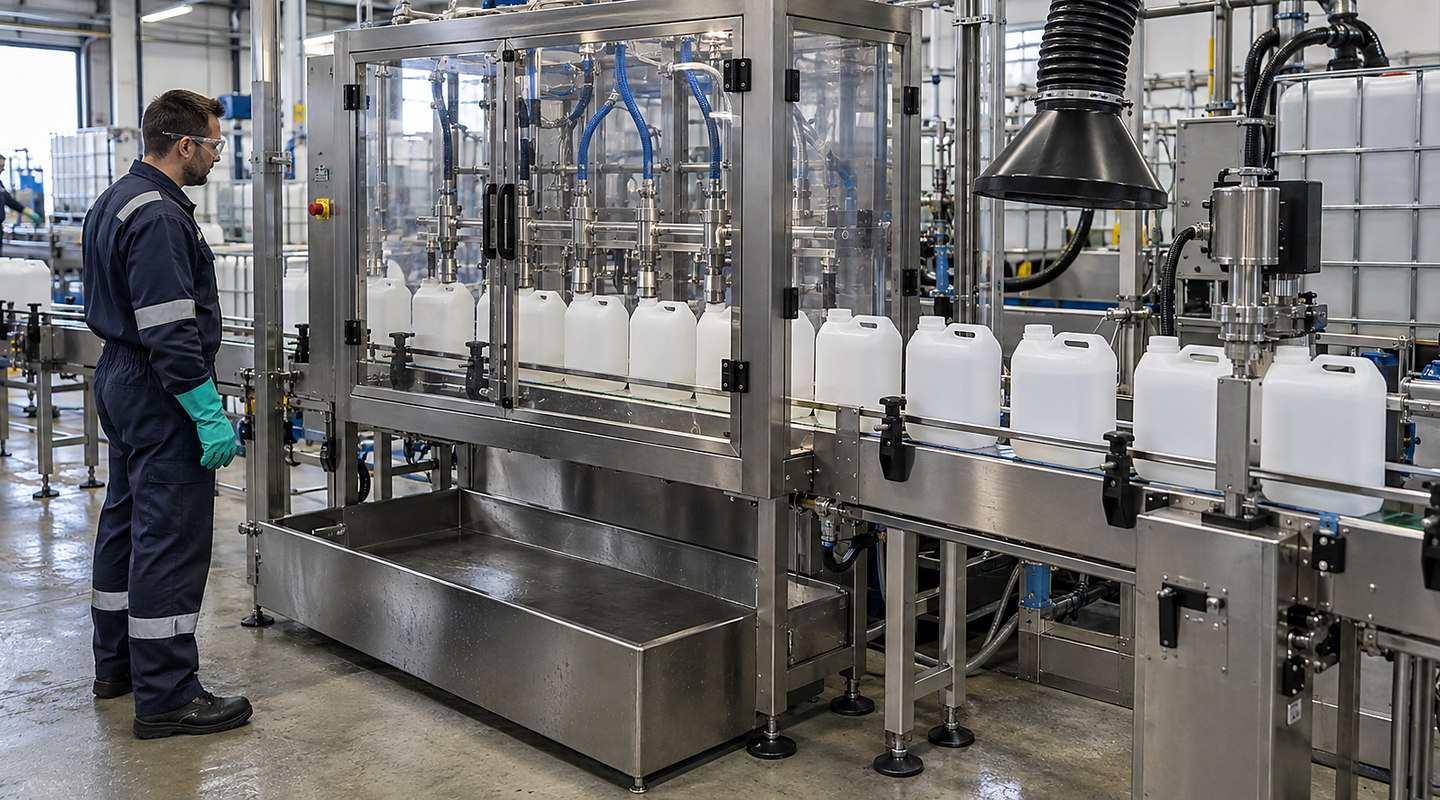
Prepare representative product for bucket filling trials: temperature, foam, particles, feed, cut-off, rim condition and cleaning.
Trial the product in its intended condition with the actual pail and lid. Record temperature, foam and particles where relevant, then assess feed and final cut-off, nozzle withdrawal, rim condition and the closing result through the complete sequence.
Include representative normal and difficult product conditions and each target fill. Use the selection guide to compare methods against the same agreed quantity and finished-pack checks.
Plan bucket filling lines around your product, pack range, target output, cleaning needs and finished-pack checks. Discuss a practical line concept with Lancing using representative samples. Use this guide to resolve product behaviour before it limits the final system.
Discuss your application

Record the product identity and condition at filling, target mass or volume, temperature and any relevant foam or particles. Identify the sample, feed conditions and production state used for each observation.
For Bucket Filling Lines, include normal production conditions, credible extremes, product and bucket variants and changes over time.
Keep the fill quantity, nozzle withdrawal, rim condition and lid seating observations separate. Record which product condition or setting changed and repeat the relevant checks after the change.
Use representative products in their normal and difficult conditions. Record temperature, foam and particles where they affect feed, discharge or the trial result; a single convenient sample may not represent the production range.
Use production pails and lids from the intended supplier. Review nozzle access and support with the bucket height, rim and handle, then inspect the rim after transfer before judging the closing result.
State whether the accepted quantity is mass or volume and agree the measurement method. Compare the smallest and largest fills, recording tare, product feed and final cut-off separately from lidding.
Count accepted closed pails at discharge. Include product replenishment and short stops alongside empty-bucket and lid loading so the observed output reflects the complete line cycle.
Include the agreed cleaning and product or format change in the trial. Record the required access, settings and operator tasks, then check the first acceptable filled and closed pack after restart.
Record fill quantity, rim condition, lid seating and stability. Agree which failed examples and interruptions to test using the acceptance checklist, and retain the response for unacceptable packs.