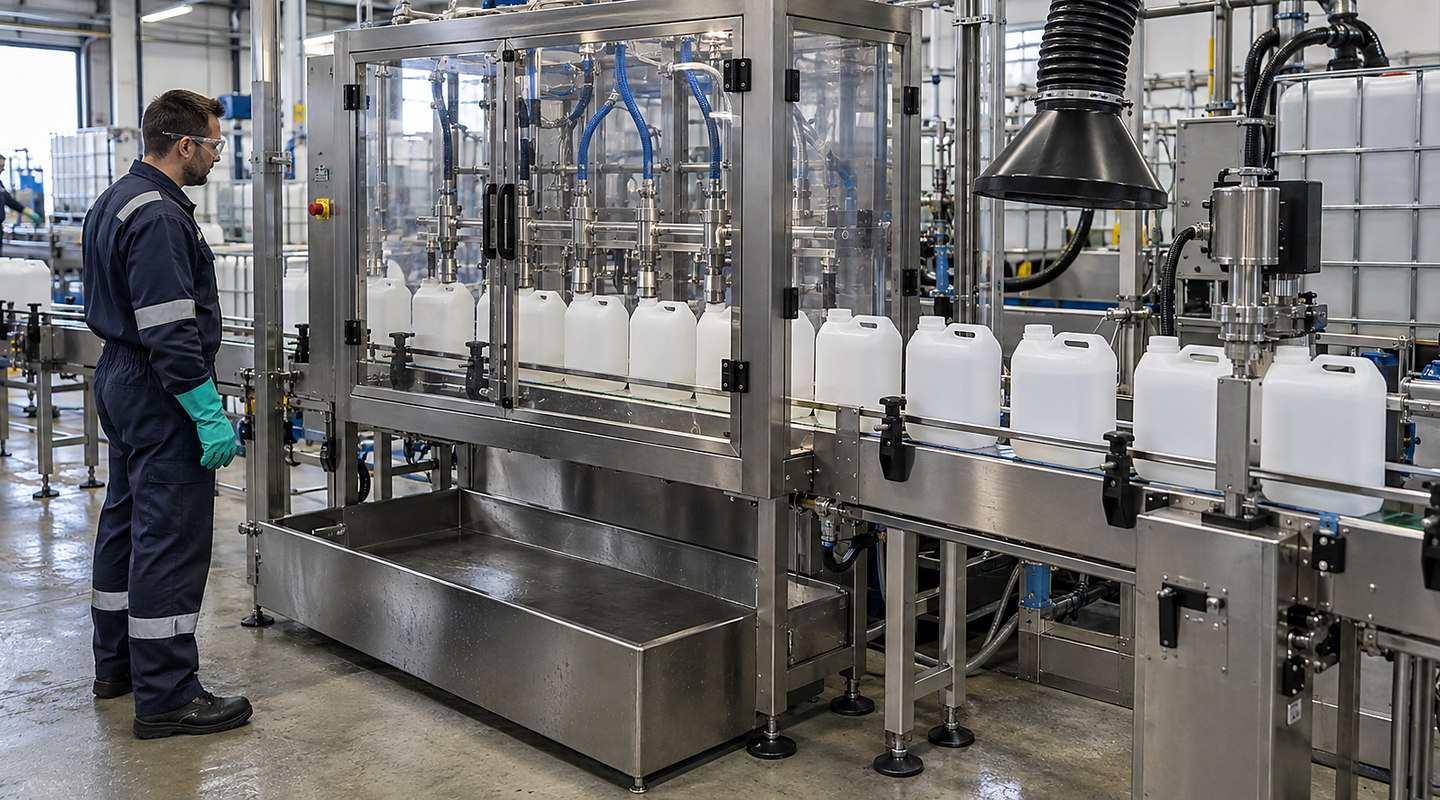
Bucket Filling Lines: How the Process Works
Plan the bucket filling sequence from empty-pail presentation through dosing, rim checks, lid application and accepted-pack discharge.
Present and locate the empty bucket, control the fill, then transfer it for lid application and closing. Check fill quantity, rim condition, lid seating and pack stability as separate results, and count accepted closed pails at discharge.
Use representative product, buckets and lids, including difficult formats. Agree the complete-line acceptance checks before comparing dosing, handling and closing arrangements.
Understand the complete route from input to accepted output — Bucket Filling Lines
Plan bucket filling lines around your product, pack range, target output, cleaning needs and finished-pack checks. Discuss a practical line concept with Lancing using representative samples. Follow the pail from empty supply to accepted closed pack. Include product and lid replenishment, short stops, cleaning and format changes in the review.
Discuss your application

Four clear stages for bucket filling lines
Keep product condition, pail format, fill result and closing outcome connected through every stage.
- 01
Review Representative Product and Pack Samples
Provide the actual product condition, target fills and intended bucket and lid samples. Review nesting, handles, rim shape and support alongside the product-behaviour trial guide.
- 02
Trial the Dosing, Handling or Closing Method
Trial dosing, nozzle withdrawal, transfers and lidding together. Record fill quantity and rim condition before and after transfer, then check lid seating and stability.
- 03
Integrate Infeed, Discharge, Controls and Access
Agree empty-container loading, product and lid supplies, controls and discharge using the line-integration guidance. Include rejected packs and routine replenishment in the operating cycle.
- 04
Run Agreed Production and Changeover Checks
Include the agreed missing-lid, interrupted-supply and stopped-discharge cases, then a format or cleaning change. Record settings, operator tasks and the first acceptable filled and closed pack after restart.
Decisions and results stay connected
| Stage | What happens | What you can review |
|---|---|---|
| Review Representative Product and Pack Samples | Review product condition, target quantity and the actual pail, handle, rim and lid combinations. | Representative samples, format list, difficult conditions and agreed separate fill and closing checks. |
| Trial the Dosing, Handling or Closing Method | Run filling, transfer and lidding together with the selected product and packaging. | Measured fill quantity, rim condition, lid seating and stability for the tested conditions. |
| Integrate Infeed, Discharge, Controls and Access | Connect infeed, product and lid supplies, controls and discharge around the intended production pattern. | Layout, services, replenishment tasks, rejected-pack route and accepted output at discharge. |
| Run Agreed Production and Changeover Checks | Challenge agreed interruptions and complete a cleaning or format change before repeating production checks. | Settings, operator tasks, failed-pack response and first acceptable filled and closed pail after restart. |
Keep connected responsibilities clear
Your final bucket filling lines scope must also account for cleaning, access and changeover method, finished-pack checks and reject handling, current regulations and the conditions at your site.
- The selected method must be trialled with representative product and packaging.
- Supplier tolerances and product-condition changes can alter handling or fill behaviour.
- Equipment selection does not replace product, hygiene, packaging or regulatory validation.