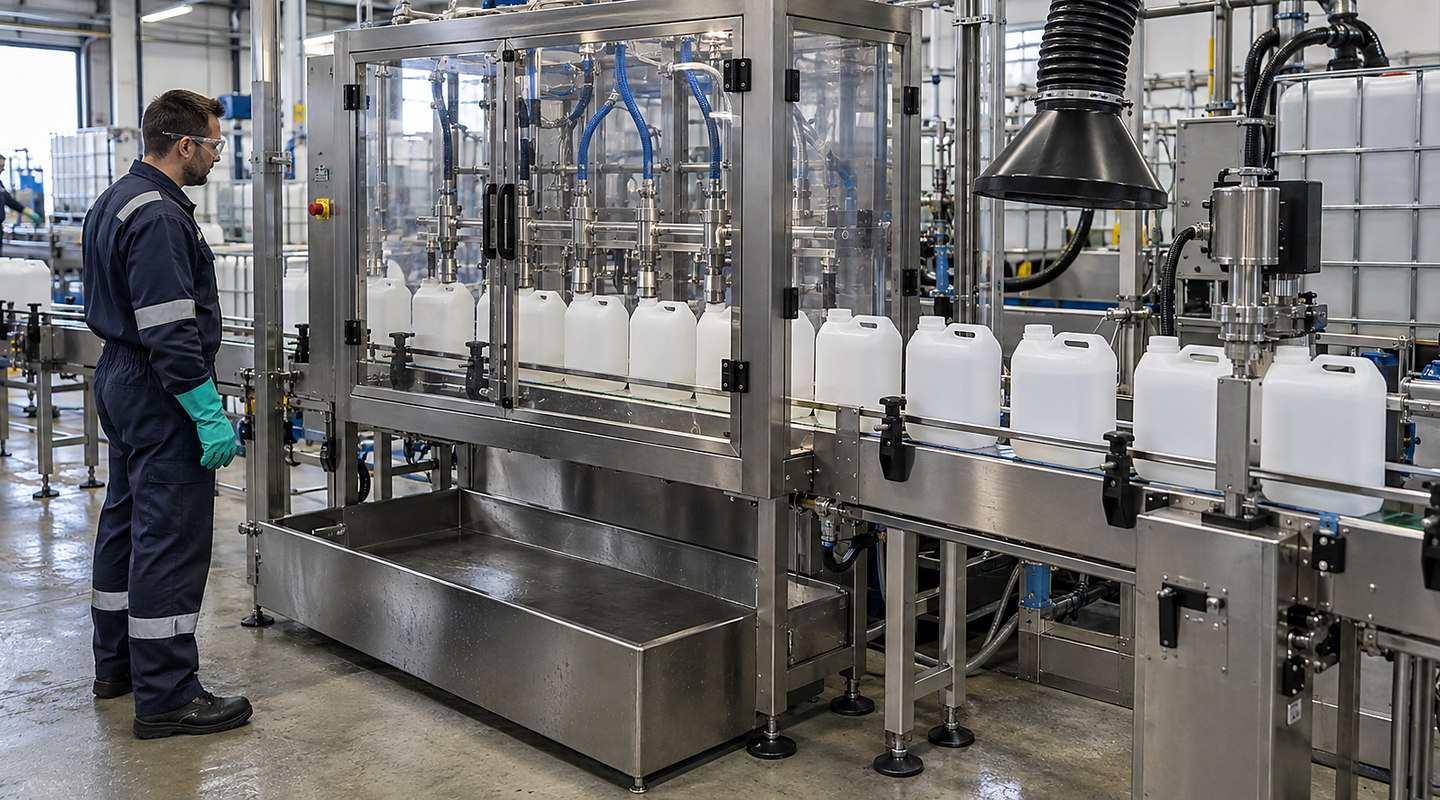
A bucket filling line needs a clear product and pack specification before equipment is compared. Share the product's behaviour, bucket range, target fill and production pattern, including cleaning and the checks needed on the finished pack.
Speak directly with Lancing about bucket and pail filling lines.
Quick answer
How do we automate filling and closing our buckets or pails?
Specify the product, fill weight or volume, bucket sizes and closure type. Review how empty buckets arrive, are located for filling and pass to lid application and closing. Include splash control, cleaning, weight checks and handling of rejected packs in a trial of the complete line sequence.
Application decisions
Plan the bucket journey from empty stack to closed pack
A bucket filler is one station in a handling sequence. A useful line concept shows how each pail is separated, supported, filled, closed and released, including the formats and production interruptions that make this difficult.
Empty bucket presentation
Supply nested and loose buckets from the intended packaging supplier. Check separation, handles, rim shape and how the bucket locates beneath the nozzle. A bucket that fills correctly by hand may still need support or orientation before it can move reliably through an automatic line.
Choose what the filler controls
State whether the accepted quantity is mass or volume. Ask how empty-container tare, product feed and final cut-off are managed. Compare the smallest and largest fills using the same acceptance method; a dosing result should remain separate from whether the bucket can be lidded cleanly.
Keep product away from the rim
Include product temperature, foam, splashing and any particles in the brief. Trial the nozzle approach, discharge and withdrawal with the real pail. Inspect the rim after transfer as well as immediately after filling, because product movement can affect the closing operation.
Match the closing method to the lid
Provide production lids, inserts and tamper features together with the buckets. Define the required seating check and how a missing, tilted or incompletely applied lid is handled. Treat lid feeding and replenishment as part of the line cycle rather than an unrelated accessory.
Change formats without losing the setup
List bucket height, diameter, handle and lid changes by format. Identify guides, nozzle settings, support height and lid tooling that need adjustment. Record the first acceptable filled and closed pack after a change, including the operator tasks needed to produce it.
Count completed packs at discharge
Measure accepted closed pails at the line exit. Include empty-container loading, product replenishment, lid loading and removal of rejected packs. This gives a better comparison of staffing and output than counting filling-head cycles while the rest of the line is idle.